

Copper-Nickel Alloys Capillary Tube & Wire
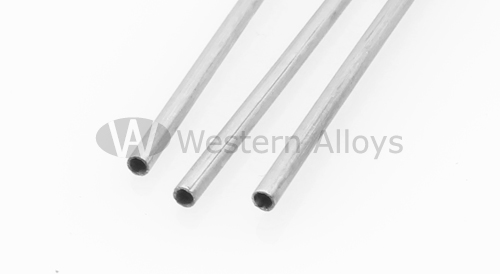
Copper-Nickel Alloys Properties
Copper-nickel alloys, with copper as the base and nickel as the core alloying element, have become key materials across multiple fields including marine, chemical, and electronic industries, thanks to their comprehensive advantages of high strength, excellent corrosion resistance, easy processability, and wide adaptability.
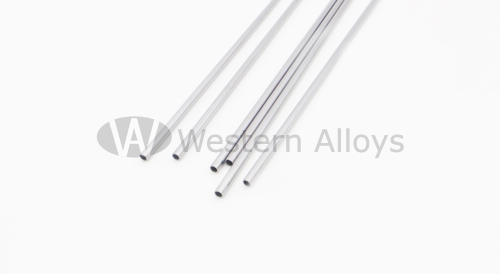
Their mechanical properties and corrosion resistance can be flexibly optimized by adjusting the nickel content and processing techniques. The application scenarios cover a full range of demands from daily-use coins to high-end aerospace equipment. Particularly, high-precision forms such as capillary tubes and wires have demonstrated irreplaceable value in niche fields like electronics and medical care, making them high-quality alloy materials that combine cost-effectiveness and reliability in the industrial sector.
Copper-Nickel Alloys Properties
1. Mechanical Properties (Room Temperature, Annealed State)
The mechanical properties of copper-nickel alloys vary with the increase in nickel content and the processing conditions.
The following are the core mechanical property data of common grades and comparison materials, highlighting their performance advantages:
|
Note: After cold processing, the tensile strength of copper-nickel alloy can be increased to 500-600 MPa, the yield strength can be raised to 300-400 MPa, while maintaining an elongation rate of more than 20%. The processing method can be adjusted according to application requirements to optimize mechanical properties.
For capillaries and wire materials, after cold processing, the strength and dimensional accuracy can be further improved. For some high-strength grades (such as CuNiSn series), the tensile strength after cold processing can reach above 1250 MPa, and the hardness is ≥ 390 Hv, which is suitable for high-precision and high-load scenarios.
2. Corrosion resistance performance
Corrosion resistance is the core strength of copper-nickel alloys, and it performs exceptionally well in marine environments:
- Resistant to seawater corrosion: In normal temperature seawater, the corrosion rate is only 0.001 - 0.005 mm/year, which is much lower than that of ordinary carbon steel (0.1 - 0.5 mm/year). It can effectively resist seawater erosion, pitting corrosion, crevice corrosion and stress corrosion cracking. Adding 1 - 2% of iron elements can further enhance the ability to resist marine biological pollution, avoiding pipe blockage caused by the attachment of shellfish and algae.
- Chemical corrosion resistance: Exhibits excellent stability in freshwater, salt water, neutral salt solutions, dilute acids (hydrochloric acid, sulfuric acid), weak bases, etc. It will only undergo significant corrosion in strong oxidizing media such as concentrated nitric acid and high-concentration chlorine solutions.
- Environmental adaptability: Within the temperature range of -196℃ to 450℃, the corrosion resistance remains stable. There is no brittleness at low temperatures and excellent oxidation resistance at high temperatures. It can meet the application requirements of various extreme environments.
3. Physical Properties
- Thermal properties: The thermal conductivity is approximately 50-80 W/(m·K), which is only 1/5 to 1/4 of that of pure copper (398 W/(m·K)). It is suitable for scenarios requiring low heat conduction; the thermal expansion coefficient is 16-18 × 10-6/℃ (20-100℃), which is close to that of steel, facilitating its use in combination with steel to reduce stress deformation caused by temperature changes.
- Electrical properties: The electrical conductivity is 15-25% IACS (International Annealed Copper Standard), which is lower than that of pure copper but superior to most corrosion-resistant alloys. It can meet the requirements of both conductivity and corrosion resistance in various applications (such as electronic connectors, resistors).
- Others: Non-magnetic, with a density of 8.9 - 8.95 g/cm3, a melting point of 1100 - 1150℃, it has excellent welding performance. It can be welded using various methods such as argon arc welding, brazing, and resistance welding. The strength of the welded joint can reach 80 - 90% of the base material.
4. High-temperature resistance performance
The high-temperature resistance performance of copper-nickel alloys varies depending on the grade:
- CuNi10 maintains excellent mechanical properties and corrosion resistance below 300℃. The usage temperature of CuNi30 can be increased to 450℃.
- At high temperatures, it can still maintain a stable structure. After long-term service in 400℃ air, the surface only forms a dense oxide film without any obvious peeling phenomenon. It can be used in components such as heat exchangers and pipes in high-temperature environments.
Copper-Nickel Alloys Capillary Tube and Wire
Copper-nickel alloy capillary tube and wire with their advantages such as high precision, corrosion resistance and conductivity, are widely used in high-end manufacturing fields such as electronics, medicine, aerospace, etc.
In the field of electronics and instrumentation
Kyanox wire (a copper-nickel 45 alloy) is used as a high-quality resistance alloy wire to manufacture resistance components in instruments and meters, overcurrent protection components for stabilized power supplies, and current measurement components for testing. It features a low resistance temperature coefficient and good stability, with a usable temperature range up to 480℃.
The capillary tube is used as a micro-cooling channel in electronic devices and a signal transmission tube for sensors, meeting the installation space requirements for precision electronic components.
In the field of medical devices
Capillaries are used in medical puncture needles, micro-infusion tubes, and sample delivery tubes for blood testing instruments. They are non-toxic, resistant to disinfectant corrosion, and can be repeatedly sterilized for use. Moreover, their inner walls are smooth, making it difficult for samples to adhere.
Wire materials are used to manufacture transmission components of micro-surgical instruments and conductive leads of implantable medical devices. They have excellent biocompatibility and will not cause rejection reactions in the human body.
Aerospace and military industry
High-strength CuNiSn alloy capillary tubes are used in the micro-cooling systems and hydraulic pipelines of spacecraft, with tensile strength reaching over 1250 MPa. They have no brittleness in high-altitude and low-temperature environments, ensuring the stable operation of the system.
Wire materials are used to manufacture precision springs and electromagnetic shielding nets for aerospace instruments, featuring both high strength and corrosion resistance, suitable for the demanding conditions of aerospace.
Chemical and Laboratory Field
Capillaries are used as separation columns in chemical chromatographs and tubing for laboratory micro-reaction devices. They are resistant to acid and alkali corrosion, have high dimensional accuracy, and can precisely control fluid flow.
Wire materials are used to manufacture the electrodes of chemical sensors and precision heating wires in laboratories. They possess both electrical conductivity and corrosion resistance, and are suitable for various chemical medium environments.
Other fields
Capillaries are used as micro throttling tubes in refrigeration equipment and as precise piping in automotive air conditioning systems. They are resistant to refrigerant corrosion and have excellent heat exchange efficiency.
Wire materials are used to manufacture precision screens and metal meshes. Their wear resistance and corrosion resistance are superior to those of ordinary metal wires, and they can be used in scenarios such as seawater filtration and chemical screening.
Common specifications of copper-nickel capillary tubes and wires
Cu-Ni Capillary tube specification
The main brands are CuNi10 (B10) and CuNi30 (B30). In some scenarios, CuNiSn high-strength alloy is used. The specific parameters are as follows:
- Outer diameter: 0.86mm to 10mm, tolerance range ±0.02mm (the smaller the outer diameter, the stricter the tolerance control)
- Wall thickness: 0.1mm to 1.5mm, wall thickness tolerance ±0.01mm
- Length: Regular 1m per piece, can be cut to custom lengths according to requirements, without obvious bending deformation
- Processing state: Annealed (T) state is suitable for scenarios requiring plasticity, cold drawn (L) state is suitable for scenarios requiring high strength, and the tensile strength after cold drawing can reach 500~600MPa
- Surface quality: Inner and outer walls are smooth, without oxidation, scratches, pinholes, etc., roughness Ra ≤ 0.8μm, can be polished as needed
Cu-Ni wire specification
It covers common copper-nickel alloy wires and special resistance alloy wires (such as constantan wires), with the grade including CuNi10, CuNi30, CuNi45 (constantan), CuNiSn, etc. Here is the specific parameters:
- Diameter: 0.2mm to 10mm. The tolerance standards are as follows: for diameters ranging from 0.2mm to 0.70mm, the tolerance is ±0.010mm; for diameters ranging from 0.71mm to 1.20mm, the tolerance is ±0.020mm
- Mechanical properties: In the annealed state, the tensile strength ranges from 220 to 420 MPa; in the cold-drawn state, it can reach 500 to 1250 MPa (for CuNiSn alloy). The elongation rate is 5% to 30% (the smaller the diameter, the slightly lower the elongation rate)
- Weight per coil: The surface is smooth, without oxide scale or burrs, The resistance stability is excellent (the resistance temperature coefficient of copper-based wire is low, and the operating temperature range is -20℃ to 480℃).
